Introduction
Most guides to the best motorcycle tours in India read like they were written by someone who’s never actually sat on a Royal Enfield above 4,000 metres with a frozen throttle cable and a headache from the altitude. This one isn’t. Everything below is built from actual seasons spent guiding riders through Ladakh’s high passes, Rajasthan’s desert highways and the quiet monasteries of Spiti Valley, and it’s written for Australian riders specifically, because the questions we get from Sydney, Melbourne and Perth are rarely the same as the ones we get from Europe.
Whether you’re chasing the best bike ride in India for your bucket list, comparing options for a Royal Enfield Himalayan tour, or simply trying to work out which motorcycle holiday actually suits your riding ability, this guide covers bike choice, routes, cost, safety, gear and everything in between.
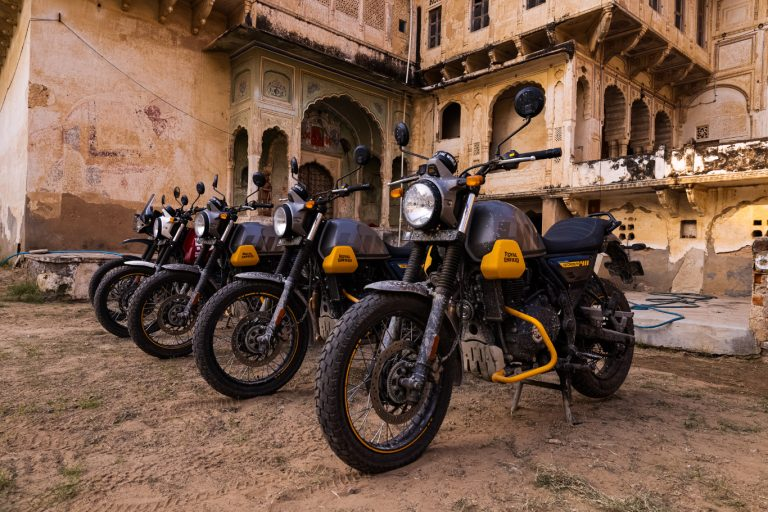
Table of Contents
- Why India Is One of the Best Countries for Motorcycle Adventures
- Best Bike for Ladakh Trip
- Best Bike Ride in India
- Best Bike Trip in India
- Best Guided Motorcycle Tours
- Best Himalayan Motorcycle Tours
- Best Motorcycle Holidays in India
- Best Motorcycle Rides for Australian Riders
- Best Motorcycle Routes in India
- Best Two Wheeler Bike in India for Touring
- Essential Riding Gear
- Road Conditions
- Travel Tips
- Safety Tips
- Packing Checklist
- Why Choose Motor Bike Tour India
- FAQs
Why India Is One of the Best Countries for Motorcycle Adventures
Few countries pack this much variety into one motorcycle trip. In the same fortnight you can crest a 5,300-metre Himalayan pass, camp beside a lake the colour of a Bunnings paint swatch, then a few weeks and regions later be sipping chai outside a 400-year-old Rajasthani fort. That range of terrain, climate and culture is exactly why adventure bike India trips and Himalayan bike tours keep showing up on riders’ bucket lists year after year.
It’s also a country where the motorcycle itself matters less than the roads and people around it. A wedding procession might block a mountain road for twenty minutes, a shepherd might walk his flock straight down the highway, and a roadside dhaba might turn out to serve the best meal of your entire trip. That unpredictability is the appeal, not a flaw, and it’s the reason a well-guided motorcycle tour India experience tends to beat a solo, self-planned attempt.
Best Bike for Ladakh Trip
The best bike for a Ladakh trip needs to balance weight, ground clearance, ease of repair and comfort, since you’ll be riding it for five to six hours a day at altitudes where even walking leaves you short of breath. Here’s how the common options stack up:
| Bike | Engine | Comfort | Off-road | Highway | Best For |
| Royal Enfield Himalayan | 411cc, air-cooled | Very Good | Very Good | Good | First-time Ladakh riders, mixed terrain |
| Royal Enfield Classic 350 | 349cc, air-cooled | Good | Fair | Good | Relaxed touring, road-focused riders |
| KTM Adventure (390/790) | 373-799cc | Good | Excellent | Very Good | Experienced riders wanting performance |
| BMW GS Series | 850-1250cc | Excellent | Very Good | Excellent | Premium touring, long-distance comfort |
| Hero Xpulse 200 | 200cc, air-cooled | Fair | Very Good | Fair | Budget-conscious, lightweight off-road |
| Honda CB500X | 471cc, liquid-cooled | Very Good | Good | Very Good | All-round touring comfort |
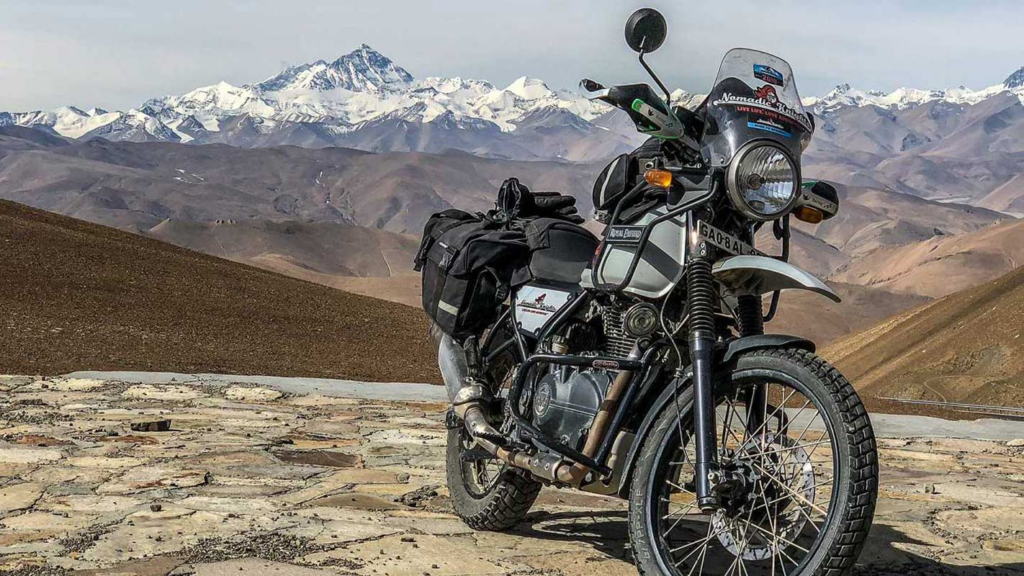
For most Australian riders on a guided Ladakh motorcycle expedition, the Royal Enfield Himalayan remains the pick of the group, simply because it’s light enough to pick up alone after a low-speed tip-over on gravel, and every mechanic along the route knows it inside out.
Best Bike Ride in India
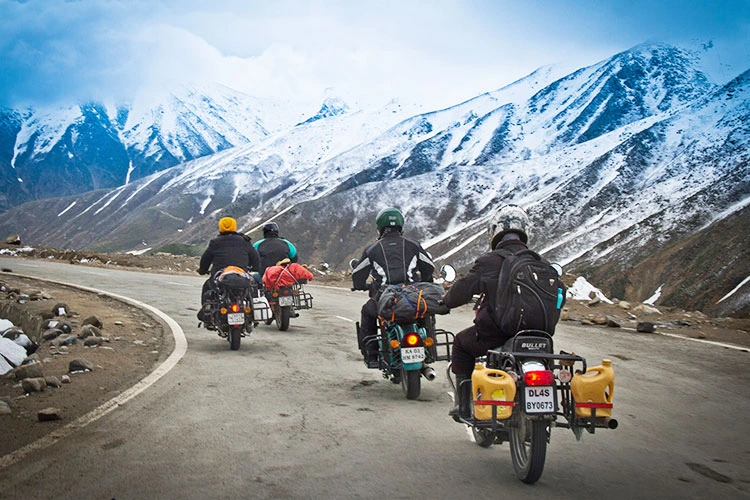
Ask five different riders what the best bike ride in India is and you’ll usually get five different answers, because the country’s regions are so different from one another.
- Leh-Ladakh — high passes, turquoise lakes and the single most photographed motorcycle backdrop in the country
- Spiti Valley — stark high-desert scenery, ancient monasteries and noticeably fewer other travellers
- Rajasthan — forts, palaces, camel country and long, flowing desert highways
- Kerala — backwaters, tea plantations and a slower, greener pace of riding
- Northeast India — tribal culture and some of the least-ridden roads in the country for those chasing something different
For riders wanting the classic, headline-grabbing Himalayan bike tours experience, Ladakh wins most polls. For riders who’ve already ticked that box and want a bucket list motorcycle ride with fewer crowds, Spiti Valley or the Northeast are worth serious consideration.
Best Bike Trip in India
Working out the best bike trip in India for you really comes down to four factors: difficulty, distance, season and budget.
| Factor | Ladakh | Spiti Valley | Rajasthan |
| Difficulty | Challenging | Moderate-Challenging | Easy-Moderate |
| Typical Distance | 1,200-1,700 km | 900-1,300 km | 1,000-1,400 km |
| Best Season | July-September | July-September | October-March |
| Typical Budget (USD) | 2,400-2,850 | 2,400 | 2,500 |
Duration matters too. A tight two-week window suits the Rooftop of the Himalaya or Little Tibet of India tours, while riders with three weeks up their sleeve can combine regions on a longer Grand Himalaya-style itinerary.
Best Guided Motorcycle Tours
A guided motorcycle tour earns the description “best” when it removes the logistics that trip up self-planned riders, without removing the sense of adventure. The core ingredients worth checking before you book any operator:
- A dedicated support vehicle for luggage, tired riders and bad-weather days
- On-call mechanics travelling with the group, not just a phone number for the nearest town
- Local guides who actually live in the region, not fly-in staff
- Accommodation booked in advance, from boutique heritage stays to camping where the route demands it
- Small group sizes that keep the tour leader genuinely across everyone’s condition and pace
- Transparent, all-in pricing with no hidden extras sprung on you mid-trip
These are exactly the elements built into every Motor Bike Tour India departure, run in groups capped at ten riders with mechanical backup and a support vehicle on every route.
Best Himalayan Motorcycle Tours
The Himalaya is where Indian motorcycle touring earns its reputation, and a handful of regions consistently top the list of best Himalayan motorcycle tours:
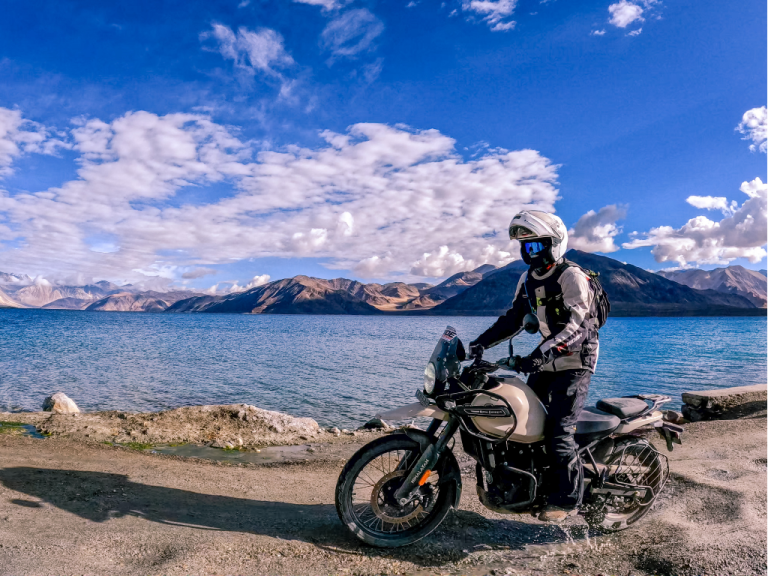
- Ladakh — Khardung La, Pangong Lake and the classic “rooftop of the world” ride
- Spiti Valley — quieter high-desert riding and centuries-old monasteries
- Kashmir — alpine meadows, pine forests and the Mughal Road route
- Uttarakhand — forested foothill riding and a gentler introduction to Himalayan altitude
Riders after one unforgettable fortnight generally choose Ladakh alone; riders wanting real depth combine Ladakh and Spiti Valley on a single, longer Himalayan motorcycle expedition.
Best Motorcycle Holidays in India
Not every rider wants a hardcore expedition, and that’s fine some of the best motorcycle holidays in India lean more toward comfort and culture than altitude and adrenaline. The Rajasthan motorcycle tour is the standout here: desert highways by day, heritage forts converted into boutique hotels by night, and a noticeably easier riding difficulty than anything in the high Himalaya. It’s a strong choice for couples, older riders, or anyone wanting their first Indian motorcycle holiday without jumping straight into mountain passes.
Best Motorcycle Rides for Australian Riders
Australian riders tend to ask a specific set of questions before booking: how hot will it actually get, is there support if a knee or shoulder plays up mid-trip, and is the group going to be mostly twenty-somethings or a broader age range. On that last point, the numbers are reassuri riders aged 45 to 64 make up more than half of most Himalayan tour groups, and daily routes are planned around the group’s actual riding ability rather than an assumed best-case pace.
For a first Indian motorcycle adventure, the Rooftop of the Himalaya (Ladakh) or Land of Kings (Rajasthan) tours are the two most commonly booked by Australian riders, offering a genuine adventure without demanding prior off-road experience.
Best Motorcycle Routes in India
Fifteen routes that consistently rank among the best motorcycle routes in India for touring riders:
- Manali to Leh via Rohtang and Baralacha La
- Srinagar to Leh via Zoji La and Kargil
- Leh to Pangong Lake via Chang La
- Leh to Nubra Valley via Khardung La
- Shimla to Spiti Valley via Kinnaur
- Manali to Spiti Valley via Kunzum Pass
- Jaipur to Jaisalmer through the Thar Desert
- Udaipur to Jodhpur via Ranakpur
- Jodhpur to Jaisalmer desert highway run
- Delhi to Rishikesh foothill route
- Munnar to Alleppey through Kerala’s tea country
- Kochi to Kanyakumari coastal run
- Guwahati to Tawang through Arunachal Pradesh
- Gangtok to Nathu La in Sikkim
- Mumbai to Goa coastal highway
Each of these features in one form or another across Motor Bike Tour India’s Himalayan, Rajasthan and South India departures, adapted into multi-day itineraries with proper acclimatisation and rest days built in.
Best Two Wheeler Bike in India for Touring
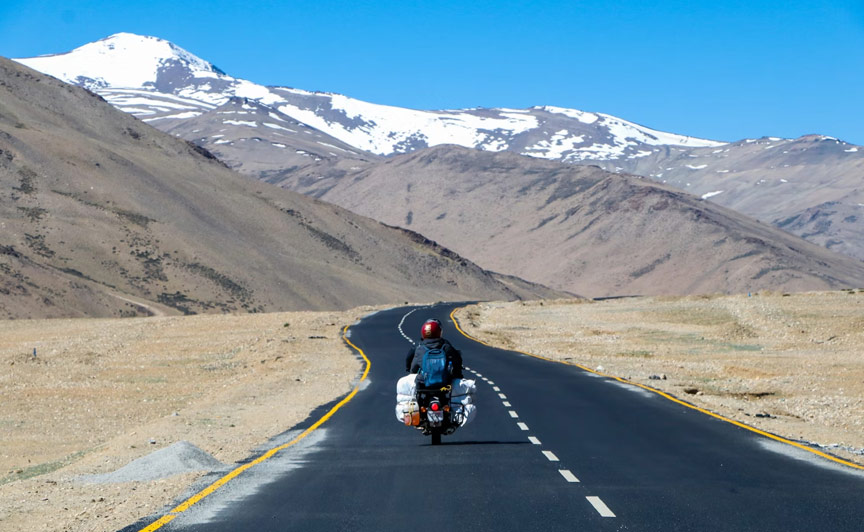
“Best two wheeler bike in India” covers a lot of ground depending on your budget and ambition, so it helps to think in categories rather than one single winner.
| Category | Example Models | Typical Rider |
| Adventure Bikes | Royal Enfield Himalayan, KTM Adventure | Mixed on/off-road touring |
| Touring Bikes | BMW GS, Royal Enfield Classic 350 | Long-distance highway comfort |
| Beginner Bikes | Royal Enfield Classic 350, Honda CB350 | New or returning riders |
| Budget Bikes | Hero Xpulse 200 | Cost-conscious, lightweight riding |
| Premium Bikes | BMW GS, Triumph Tiger | Riders wanting maximum comfort and tech |
Essential Riding Gear
- Armoured riding jacket and pants suited to both cold mountain mornings and warm valley afternoons
- A full-face helmet rated to a recognised safety standard, ideally one you’ve already worn for long stretches at home
- Waterproof over-layers, since Himalayan weather can turn in under an hour
- Thermal base layers and riding gloves rated for near-freezing early starts
- Sturdy, ankle-supporting riding boots rather than casual footwear
- A buff or neck gaiter for dust on desert routes and cold on mountain passes
Road Conditions
Road quality across India swings from smooth new tarmac to sections that disappear into gravel and river crossings without warning, sometimes within the same afternoon. Himalayan routes carry the added complexity of landslide-prone sections, unmarked edges with serious drop-offs, and weather that can close a pass with little notice. None of this is a reason to avoid these motorcycle routes it’s the reason experienced local guides plan realistic daily distances and always build in contingency time rather than racing a fixed schedule.
Travel Tips
- Arrive in Delhi or Leh a day early to shake off jet lag before riding starts
- Carry small denomination cash for remote dhabas and fuel stops that don’t take cards
- Learn a handful of Hindi greetings it goes a long way with locals in smaller towns
- Keep phone data topped up before entering restricted-network areas like parts of Ladakh
- Book any Himalayan trip with acclimatisation days already built into the itinerary
Safety Tips
- Never skip acclimatisation days above 3,500 metres, even if you’re feeling fine
- Ride within sight of at least one other rider on remote mountain sections
- Check tyre pressure and chain tension every morning before setting off
- Carry a basic first-aid kit and know where the support vehicle is each day
- Respect local traffic customs horn use in India is communication, not aggression
Packing Checklist
| Category | Items |
| Riding Gear | Helmet, jacket, pants, gloves, boots, rain layer |
| Clothing | Thermals, casual evening wear, warm jacket, sun hat |
| Documents | Passport, visa, International Driving Permit, travel insurance |
| Health | Personal medication, altitude sickness tablets, sunscreen, lip balm |
| Extras | Power bank, universal adaptor, dust mask, reusable water bottle |
Why Choose Motor Bike Tour India
Motor Bike Tour India is based in Bhimtal, Uttarakhand, right in the foothills of the Himalaya, and run entirely by local staff who ride these regions themselves rather than a call centre reading from a script. Groups are capped at ten riders so the tour leader often founder Yogesh Kumar himself can genuinely keep track of everyone’s pace, condition and concerns rather than managing a crowd.
Every departure includes a support vehicle, on-call mechanical backup for the Royal Enfield Himalayan and Bullet 500 motorcycles used on tour, and accommodation ranging from heritage forts to Himalayan camping, chosen to suit the region rather than a one-size-fits-all standard. Pricing is set directly with no middleman margin added, and custom or private group departures are available for riders wanting their own dates or their own crew of mates along for the ride.
Conclusion
There’s no single, universally best motorcycle tour in India there’s the best one for the rider you actually are, whether that’s a first-timer wanting Rajasthan’s forts and flat desert highways, or a seasoned rider chasing Khardung La and Pangong Lake on a Royal Enfield Himalayan. What every good version of this trip shares is proper local guidance, a support vehicle, realistic daily distances and a small group that feels like riding with mates rather than strangers.
If you’re ready to turn years of scrolling through other people’s Ladakh photos into your own, Motor Bike Tour India runs exactly that kind of trip, several times a season, in groups small enough that you’ll actually be remembered by name.
Get in touch to check departure dates for the Rooftop of the Himalaya, Little Tibet of India, Land of Kings and other tours, or ask about a custom private departure for your own group of riders.
Frequently Asked Questions
1. What is the best bike for a Ladakh trip?
The Royal Enfield Himalayan is generally considered the best bike for a Ladakh trip because of its light weight, long-travel suspension and simple air-cooled engine that’s easier to fix at altitude than more complex adventure bikes. The Classic 350 is a fine choice for riders who prefer a more relaxed, road-focused ride and don’t mind less ground clearance. Larger adventure machines like the KTM 390/790 Adventure or BMW GS handle the terrain well too, but they’re heavier to pick up if you drop them on a loose gravel switchback, which happens to almost everyone at least once.
2. Which motorcycle is best for touring India?
For most touring routes across India, a mid-capacity, air or oil-cooled motorcycle strikes the best balance of comfort, fuel range and ease of repair. The Royal Enfield Classic 350 and Himalayan cover the vast majority of touring needs, from Rajasthan’s desert highways to Himalayan switchbacks, and parts or mechanics familiar with them are available almost everywhere along the route, which matters more than horsepower once you’re several days from the nearest city.
3. Which is India’s best bike trip?
There’s no single answer that fits everyone, but the Ladakh motorcycle expedition is usually the ride Australian riders talk about years later, thanks to Khardung La, Pangong Lake and the sheer scale of the Himalaya. Riders wanting culture and colour alongside good riding roads tend to rate the Rajasthan motorcycle tour just as highly, since it swaps high passes for forts, palaces and desert campfires.
4. What is the best guided motorcycle tour in India?
The best guided motorcycle tours combine an experienced local tour leader, a support vehicle for luggage and tired riders, on-call mechanical backup, and small group sizes that keep the experience personal rather than a queue of bikes. Motor Bike Tour India runs all of its tours this way, with a strict cap of ten riders per group and a founder who leads many departures personally.
5. What is the best Himalayan motorcycle tour?
Among Himalayan motorcycle tours, the Rooftop of the Himalaya (Ladakh) tour is the most famous for its high passes and lake circuits, while the Little Tibet of India (Spiti Valley) tour offers a quieter, less-travelled alternative with equally dramatic scenery. Riders short on time but wanting the full Himalayan flavour often combine both regions on the longer Grand Himalaya tour.
6. How much does a motorcycle holiday in India cost?
Guided motorcycle holidays in India typically range from around USD 2,400 for a two-week Ladakh or Spiti Valley tour up to roughly USD 3,750 for the longest combined Himalaya expeditions. Pricing generally covers the motorcycle, fuel, accommodation, a support vehicle, meals as specified, and a tour leader, though flights into India and personal riding gear are usually extra.
7. Which motorcycle is most comfortable for long rides?
For five to six hours in the saddle each day, comfort comes down to seat design, wind protection and a riding position that doesn’t load up your wrists. The Royal Enfield Himalayan and Honda CB500X are both well regarded for all-day comfort, while touring-focused adventure bikes like the BMW GS add wind protection and a more relaxed reach to the bars at the cost of extra weight.
8. Can Australians ride motorcycles in India?
Yes. Australian riders can ride in India using a valid International Driving Permit alongside their Australian licence, and on a guided tour the operator typically handles the paperwork, permits and any regional restricted-area passes needed for places like Ladakh. Riding your own imported bike is a separate, more complex process involving carnet documentation that most touring riders don’t bother with.
9. Do I need an international driving permit to ride in India?
An International Driving Permit is strongly recommended alongside your home licence, since it translates your Australian licence into a format that Indian authorities and rental or tour operators recognise more easily. It’s inexpensive and quick to arrange through your state motoring body before you leave Australia.
10. What is the best time of year for a Ladakh motorcycle trip?
July and August are generally the best months for a Ladakh motorcycle trip, once the high passes have fully opened for the season and snowmelt has settled. September is a strong second option, with cooler air, clearer skies and noticeably fewer other riders on the road.
11. Is it safe for solo travellers to join a group motorcycle tour?
Solo travellers make up a large share of riders on guided motorcycle tours, and it’s genuinely one of the easiest ways to do a big Indian motorcycle trip without the logistics falling on your shoulders. Small group sizes, a tour leader, and a support vehicle mean solo riders are never actually riding alone, and lasting friendships between strangers are one of the most common outcomes of these trips.
12. What fitness level do I need for a Himalayan motorcycle tour?
You don’t need to be an elite athlete, but a reasonable base level of fitness helps, since riding at altitude for five to six hours a day is more tiring than the same distance at sea level. Riders in their 50s and 60s make up a large proportion of Himalayan tour groups, so age is far less important than being reasonably active and comfortable on a motorcycle.
13. Can I bring my partner if they don’t want to ride?
Yes. Non-riding partners can travel as a pillion passenger or, on days they’d rather not be on the bike at all, take a seat in the support vehicle instead, so nobody is left choosing between the trip and their travelling companion.
14. What happens if my motorcycle breaks down mid-tour?
Mechanical backup travels with the group on every departure, so mechanical issues are generally resolved on the roadside or at the next stop without derailing your day. This is one of the clearest advantages of a guided tour over riding solo, particularly in remote sections of Ladakh or Spiti Valley where the nearest workshop might be hours away.
15. How many kilometres do you ride each day?
Daily riding sessions are built around five to six hours in the saddle, which translates to a wide range of distances depending on terrain, from a relatively short high-altitude day crossing a pass to a longer, faster stretch on open Rajasthan highway.
16. What’s the difference between the Ladakh tour and the Spiti Valley tour?
The Ladakh route delivers the headline passes like Khardung La and the vivid blue of Pangong Lake, while Spiti Valley (the Little Tibet of India) is quieter, less developed for tourism, and has its own stark, high-desert character with ancient monasteries perched on cliffsides. Riders wanting both can combine them on the longer Grand Himalaya tour.
17. Do I need previous off-road riding experience?
Prior off-road experience helps but isn’t essential, since itineraries are planned with daily riding ability of the group in mind and tour leaders adjust the pace accordingly. A few sections, particularly around water crossings or loose gravel, reward some prior experience, but plenty of first-timers complete these tours successfully every season.
18. What should I pack for a Himalayan motorcycle tour?
Layered thermal clothing, a good quality riding jacket and pants with armour, waterproofs, thermal gloves and a buff or neck warmer are essentials, alongside sunscreen and sunglasses for the intense high-altitude sun. A detailed packing list tailored to your specific tour and season is provided after booking.
19. Is altitude sickness a real risk on the Ladakh route?
Yes, altitude sickness is a genuine consideration above roughly 3,500 metres, which is why itineraries build in acclimatisation days in Leh before pushing higher, along with steady hydration and a realistic daily pace. Tour leaders are experienced in recognising early symptoms and adjusting plans when needed.
20. Why should I book with Motor Bike Tour India instead of a bigger international operator?
Motor Bike Tour India is run entirely by local staff who live and ride in the regions they guide, prices are set directly without a middleman’s margin added on top, and groups are capped at ten riders so the tour leader can genuinely look after everyone rather than manage a crowd. For riders wanting an authentic, well-supported Indian motorcycle expedition rather than a mass-market package, that local, hands-on structure is the difference.