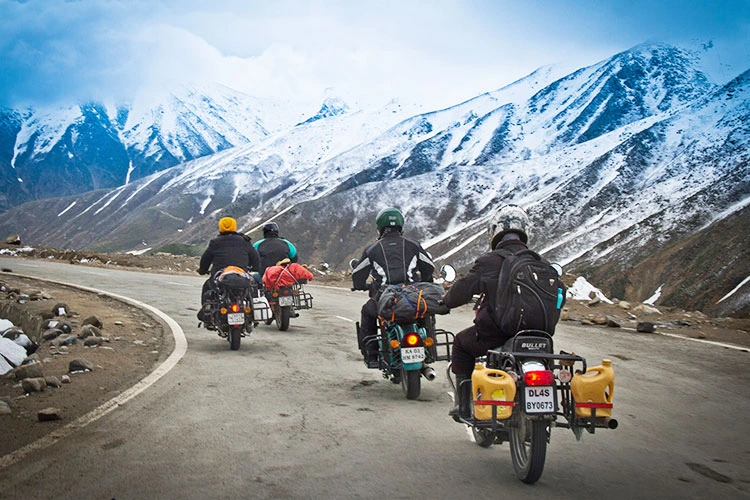
If you’ve spent any time researching himalayan motorcycle tours, you’ve almost certainly come across two names that keep popping up: the Grand Himalaya Tour and the Rooftop of the Himalaya Tour. Both promise the same intoxicating mix of snow-capped passes, Royal Enfield thunder, and roads that seem to disappear into the sky. But for Australian riders planning a once-in-a-lifetime trip halfway across the world, “both look amazing” isn’t a good enough answer. You need to know exactly what you’re signing up for before you book flights, apply for leave, and pack your riding gear.
This guide breaks down both himalayan moto tours side by side route, altitude, difficulty, duration, and cost so you can work out which one actually suits your riding experience, fitness level, and appetite for adventure.
Quick Overview: What Are These Two Tours?
The Grand Himalaya Tour is the classic, most-travelled route through Ladakh Manali to Leh, out to Nubra Valley, across Pangong Lake, and back. It’s the tour that built the reputation of Himalayan motorcycling internationally, and it’s the one most first-time riders from Australia choose because it balances jaw-dropping scenery with a manageable difficulty curve.
The Rooftop of the Himalaya Tour pushes further and higher. It typically includes everything in the Grand Himalaya route, then adds extreme-altitude extensions like Umling La (one of the highest motorable passes in the world, sitting above 5,798 metres) and remote border regions that see very few foreign riders. It’s built for people who’ve already ticked off a standard Himalayan trip, or who simply want the hardest, highest, most bragging-rights-worthy version of the ride.
Think of it this way: Grand Himalaya is the definitive Himalayan motorcycle experience. Rooftop of the Himalaya is the “I want to go further than most people ever will” version.
Route Comparison
Grand Himalaya Tour Route
A typical itinerary runs Manali → Jispa → Sarchu → Leh → Nubra Valley → Pangong Lake → Leh, covering some of the most photographed roads on the planet: Rohtang Pass, Baralacha La, Khardung La, and the shimmering blue expanse of Pangong Tso. You’ll ride through pine forests, high-altitude deserts, and villages that look like they’ve been lifted from another century.
Rooftop of the Himalaya Route
This itinerary includes the Grand Himalaya highlights but extends into Hanle, Umling La, and sometimes the Tso Moriri and Chumathang belt areas closer to the India-China border that require special permits and significantly more remote riding, with fewer settlements, less mobile coverage, and longer stretches between fuel stops.
For Australian riders used to long, remote stretches (think the Nullarbor or the Gibb River Road), the Rooftop tour’s isolation will feel familiar in spirit, but the altitude changes everything, which brings us to the next point.
Altitude and Difficulty: The Real Deciding Factor
This is where the two tours genuinely diverge, and it’s the single most important factor for Aussie riders to weigh up.
Grand Himalaya Tour takes you above 5,000 metres at Khardung La but otherwise keeps most riding days in the 3,500–4,500 metre range, with proper acclimatisation stops built in at Manali and Leh. It’s demanding, but it’s a well-trodden path with established rescue and support infrastructure.
Rooftop of the Himalaya Tour spends considerably more time above 4,800 metres, with Umling La sitting at nearly 5,800 metres higher than Everest Base Camp. At that altitude, even fit riders can experience symptoms of altitude sickness, and support infrastructure is thinner. This tour is genuinely recommended only for riders who have already completed a Himalayan trip, or who are confident in their fitness and have consulted a doctor about high-altitude travel beforehand.
If you’re an experienced tourer back home but this is your first time above 3,000 metres, the Grand Himalaya Tour is the smarter starting point.
Duration and Pacing
Grand Himalaya Tours typically run 10 to 14 days from Delhi or Manali, with rest days built in around Leh to help with acclimatisation and to explore monasteries, markets, and side trips without spending every day on the bike.
Rooftop of the Himalaya Tours often extend to 14–18 days, since the additional high-altitude legs require slower travel, more buffer days for weather, and extra acclimatisation stops. Riding at extreme altitude also means shorter daily distances you simply can’t push the same kilometres you would at sea level.
For Australians flying in on limited annual leave, this pacing difference matters. A 10-day Grand Himalaya trip is realistic to slot into a two-week leave block including flights. The Rooftop tour will usually eat closer to three weeks once you factor in international travel time.
Motorcycle and Rider Fitness Requirements
Both tours are typically ridden on Royal Enfield Himalayan or Classic 500cc motorcycles, well suited to the terrain, altitude, and unpredictable road surfaces you’ll encounter. Riding experience requirements differ slightly:
- Grand Himalaya Tour: Suitable for riders with solid touring experience comfortable on a loaded bike over 200+ km days, some gravel/loose surface confidence helpful but not essential given the well-maintained core route.
- Rooftop of the Himalaya Tour: Recommended for riders with prior high-altitude or off-road touring experience, since the extended sections involve rougher, less-maintained tracks and greater exposure to weather and altitude-related fatigue.
If your riding background is mostly bitumen touring around Australia with the occasional gravel detour, Grand Himalaya will feel adventurous without being overwhelming. If you’ve already done multi-day off-road trips or previous high-altitude expeditions, Rooftop of the Himalaya will feel like the natural next step.
Cost Comparison
Because of the extended duration, additional permits for restricted border areas, and more logistically complex support required at extreme altitude, the Rooftop of the Himalaya Tour generally costs more than the Grand Himalaya Tour often 20–35% higher for a comparable group size and bike category. For a full breakdown of what’s included in pricing and typical costs in Australian dollars, see our companion guide, How Much Does a Himalayan Motorcycle Tour Cost in AUD? 2027 Price Guide.
Generally, both tour styles include the motorcycle, fuel, accommodation, meals, a support vehicle, mechanic, and an experienced tour leader but always confirm inclusions line by line before booking, since permit fees for restricted zones (relevant to the Rooftop tour) can be quoted separately by some operators.
Which One Should You Choose?
Here’s a simple way to decide:
Choose the Grand Himalaya Tour if:
- This is your first Himalayan motorcycle trip
- You have 10–14 days of leave available, flights included
- You want the classic, iconic ride Khardung La, Pangong Lake, Nubra Valley without pushing into extreme-altitude territory
- You’re touring-fit but haven’t specifically trained or been medically cleared for extreme altitude
Choose the Rooftop of the Himalaya Tour if:
- You’ve already ridden the Grand Himalaya route (or an equivalent high-altitude trip) and want to go further
- You have 2.5–3 weeks available
- You’re comfortable with rougher terrain, longer isolation between towns, and higher altitude exposure
- You’ve spoken with a doctor about altitude and feel confident in your fitness
Mechanical Support and What Happens If Your Bike Breaks Down
Motorcycle reliability at altitude is a legitimate concern, and it’s worth understanding how each tour handles it. Royal Enfield Classic 500s are widely used across both routes precisely because they’re simple, robust machines that local mechanics throughout the region know intimately parts availability and mechanical familiarity matter more out here than raw performance specs.
On the Grand Himalaya Tour, the well-established route means breakdowns are generally straightforward to manage: the support vehicle carries spare parts, the accompanying mechanic can handle most common issues roadside, and even in a worst-case scenario, replacement bikes or parts can usually reach you within a reasonable timeframe given how frequently this route is travelled.
On the Rooftop of the Himalaya Tour, mechanical support becomes more critical precisely because you’re further from easy resupply. A good operator on this route carries a more comprehensive spares kit and, ideally, has contingency plans (a second support vehicle, or arrangements with military/local outposts in extremely remote sections) for worst-case scenarios. This is genuinely one of the most important questions to ask an operator before booking the Rooftop tour specifically don’t assume it’s handled the same way as a standard Ladakh trip.
A Note on Weather Windows
Both tours are strictly seasonal. The riding window generally runs from early June to mid-September, when the high passes are clear of snow and open to traffic. Book too early or too late in the season and you risk snow closures on Rohtang La, Baralacha La, or Umling La particularly relevant for the Rooftop tour, where the higher passes stay snowbound longer into the season. Aussie riders flying in from a Southern Hemisphere winter should plan around this window carefully rather than trying to match the trip to Australian school holidays or long weekends.
What’s Typically Included on Each Tour
Understanding inclusions helps you compare quotes properly rather than just looking at the headline price. Most Grand Himalaya and Rooftop of the Himalaya packages include:
- Royal Enfield Classic 500cc (or similar) motorcycle with fuel for the duration
- Twin-share accommodation in guesthouses, hotels, or camps along the route
- Breakfast and dinner daily, with lunch stops arranged en route
- A support/backup vehicle carrying luggage, spare parts, and emergency supplies
- An experienced mechanic travelling with the group
- An English-speaking tour leader with route and altitude experience
- Basic first aid support and oxygen cylinders carried in the support vehicle (standard practice on reputable high-altitude tours)
What’s typically not included, and worth budgeting separately for: international and domestic flights, travel insurance, Indian e-Visa, riding gear (unless specified as included), alcoholic drinks, tips, and any permit fees for restricted border zones particularly relevant to the Rooftop of the Himalaya route, where Inner Line Permits are required for areas like Hanle and Umling La.
Group Size and Riding Style
Both tours are typically run as small-group departures, usually between 8 and 16 riders, with a lead rider, a sweep rider at the back of the pack, and the support vehicle following at a sensible distance. This structure matters more on the Rooftop of the Himalaya route, where mobile coverage disappears for long stretches and a rider falling behind or having mechanical trouble needs to be found quickly.
If you’re the kind of rider who prefers setting your own pace rather than group riding, ask your operator directly about how much flexibility is built into daily riding some operators run a tighter formation for safety reasons on the highest-altitude days, loosening up on the more established sections of the route.
Packing Differences Between the Two Tours
While the core packing list overlaps heavily riding jacket, thermal base layers, gloves rated for cold weather, a buff or balaclava, and sturdy waterproof boots the Rooftop of the Himalaya Tour demands a slightly more serious approach to cold-weather gear given the extended time spent above 5,000 metres. Riders on this route should also pack:
- A higher-rated thermal layer system, since overnight temperatures at Hanle and similar high camps can drop well below freezing even in July and August
- A basic pulse oximeter to self-monitor blood oxygen levels given the extended high-altitude exposure
- Extra lip balm and moisturiser skin dries out noticeably faster at extreme altitude and low humidity
- A physical, printed copy of any Inner Line Permits, since some checkpoints on the Rooftop route have inconsistent connectivity for digital verification
Frequently Asked Questions
Can a beginner rider do the Grand Himalaya Tour? “Beginner” is relative here you don’t need off-road racing experience, but you do need solid confidence on a loaded touring motorcycle over long daily distances, including some gravel and water-crossing sections. If your riding experience is limited to short local rides, we’d recommend building up touring kilometres on sealed roads at home first.
Is the Rooftop of the Himalaya Tour worth it if I’ve already done Ladakh once? For most riders who’ve completed a standard Ladakh route and want to go further, yes it’s specifically designed as the “next level” trip, taking you to passes and regions that see a fraction of the traffic of the core Ladakh route.
Do I need previous high-altitude experience for either tour? Not strictly required for the Grand Himalaya Tour if you follow a proper acclimatisation schedule, but genuinely recommended for the Rooftop of the Himalaya Tour given the extended time above 5,000 metres.
Can I switch from a Grand Himalaya booking to the Rooftop tour later? Most operators allow this with enough notice, subject to availability, though pricing will adjust for the longer itinerary and additional permits. It’s worth discussing with your operator at the time of booking if you’re on the fence.
Final Thoughts
Both the Grand Himalaya Tour and the Rooftop of the Himalaya Tour deliver a riding experience unlike anything available in Australia but they’re not interchangeable trips. The Grand Himalaya Tour is the right starting point for the vast majority of Australian riders: iconic scenery, manageable altitude progression, and a duration that fits realistically into most leave allowances. The Rooftop of the Himalaya Tour is the reward for riders who’ve already proven themselves at altitude and want to chase the highest motorable roads on Earth.
Whichever route calls to you, ride it with an operator who knows the terrain, carries proper high-altitude support, and puts rider safety ahead of ticking boxes on an itinerary. Explore the full Grand Himalaya Tour itinerary and departure dates at motorbiketourindia.com/grand-himalaya.htm and start planning your Himalayan ride today.